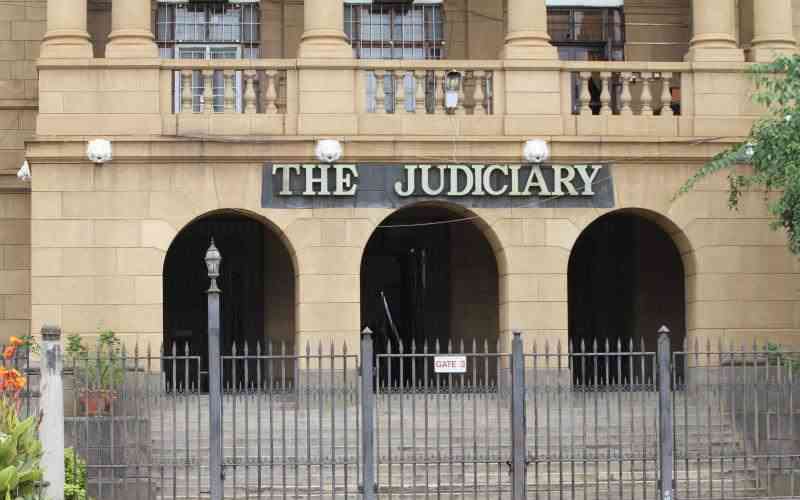
The Judicial Service Commission (JSC) is seeking reforms that would allow it to impose disciplinary measures on judges for minor misconduct, aiming to improve accountability across the Judiciary.
The move comes amid concerns that the current legal framework only permits the commission to either recommend a judge’s removal or dismiss complaints, leaving no room for intermediate sanctions.
JSC Vice-Chair Isaac Rutto told the National Assembly’s Constitutional Implementation Oversight Committee (CIOC) that the commission “can only recommend removal of a judge or dismiss petitions and complaints, with no provision for immediate sanctions when minor violations are identified.”
He explained that both the Constitution and the Judicial Service Act “are silent on the process of reprimanding judges,” creating a gap that prevents the JSC from acting on less serious infractions.
According to Rutto, the existing system is too rigid, forcing the commission into a binary choice between dismissal or complete exoneration.
“This binary approach (dismissal or exoneration) fails to provide proportionate disciplinary responses and undermines the intended purpose of judicial accountability,” he said.
The CIOC, chaired by Suba South MP Caroli Omondi, has tasked the JSC with drafting proposed amendments that would allow for measured disciplinary action.
These reforms would establish procedures for reprimanding judges for minor breaches and introduce comprehensive regulations that give the commission options beyond outright removal or dismissal.
Article 168 of the Constitution lays out the process for removing judges, including grounds such as incapacity, incompetence, gross misconduct, breach of the code of conduct, or bankruptcy.
Removal can be initiated by the JSC or through a petition, followed by tribunal investigations and, if justified, presidential suspension. This process is designed to safeguard judicial independence while ensuring accountability.
Rutto highlighted how other countries, including South Africa and Uganda, have frameworks that allow judges to be disciplined proportionately. He said Kenya’s current approach leaves no room for addressing minor violations effectively.
Last year, Supreme Court judges led by Chief Justice Martha Koome obtained a High Court order preventing the JSC from hearing petitions for their removal, arguing that the commission lacked proper regulations and jurisdiction.
The High Court temporarily paused proceedings, questioning the legality of the JSC’s processes and petitions based on leaked documents.
The debate has sparked discussions on the limits of the JSC’s authority, as courts have emphasized that its role is to investigate complaints and recommend removal, not to adjudicate all forms of misconduct, which often require the appointment of tribunals.
By pushing for these reforms, the JSC seeks to create a more nuanced system of accountability that can address both minor and serious judicial breaches without undermining the independence of the Judiciary.































Comments
Sign in with Google to comment, reply, and like comments.
Continue with Google